Discover how one silent habit is killing your relationship without you knowing. Learn how to break the cycle of emotional withdrawal and restore true intimacy.
I remember sitting across the living room from my partner on a rainy Tuesday evening, the silence between us heavier than any shouting match could ever be. A minor disagreement about household chores had occurred an hour prior. Instead of speaking, I chose the familiar, comforting armor of stone-cold silence. I told myself I was just “cooling off,” but deep down, I was pulling up the drawbridge. I was retreating into safety, completely blind to the fact that this exact behavioral pattern was eroding the foundation we had spent years building. Many couples believe that regular shouting matches or explosive arguments are the ultimate signs of a failing partnership. However, my years of analyzing human behavioral dynamics and relationship counseling trends have taught me otherwise. The true enemy of intimacy rarely makes a sound. It is a slow, insidious erosion that creeps into your daily life under the guise of “keeping the peace.” If you feel an unexplainable distance growing between you and your partner, you need to recognize that one silent habit is killing your relationship right now, and the sooner you identify it, the sooner you can save your bond.
Quick Answer: What is the Silent Habit Destroying Your Relationship?
The devastating pattern where one silent habit is killing your relationship is known as emotional withdrawal or stonewalling. This occurs when one partner completely shuts down, avoids conflict, and offers the silent treatment instead of engaging in constructive communication. By refusing to communicate, you inadvertently signal to your partner that you have checked out emotionally, which destroys trust, breeds deep resentment, and slowly disconnects the relationship from the inside out.
Understanding the Psychology of Emotional Withdrawal
To truly grasp howone silent habit is killing your relationship, we must look underneath the surface of human psychology. Emotional withdrawal is rarely an act of malice; rather, it is a maladaptive defense mechanism. When a conflict arises, your nervous system can become flooded with cortisol and adrenaline, triggering a primal fight-or-flight response. For individuals who lean toward withdrawal, “flight” manifests as emotional and physical shutdown.
When you withdraw, you create a psychological vacuum. Your partner is left stranded in an emotional desert, trying to guess what you are thinking or feeling. This psychological absence is often experienced by the other person as a form of abandonment. Over time, the partner who is shut out stops trying to reach across the divide, leading to a state of parallel living where you are roommates rather than lovers.
The Stonewalling Phenomenon
The pioneer of relationship research, Dr. John Gottman, identified stonewalling as one of the “Four Horsemen of the Apocalypse” in a relationship. His longitudinal studies demonstrate that when stonewalling becomes a chronic habit, it is one of the most accurate predictors of divorce and separation. It is a clear sign that the communication infrastructure of your partnership has collapsed.
Why “Keeping the Peace” is Actually Destroying You
Many people justify their silence by claiming they want to avoid drama or preserve harmony. You might tell yourself, “If I don’t say anything, the issue will just blow over.” This is a dangerous cognitive distortion. Problems do not disappear simply because you refuse to look at them; they merely mutate into resentment.
The Illusion of Harmony
When you choose silence over hard conversations, you are prioritizing short-term comfort over long-term relationship survival. This fake harmony feels peaceful on the surface, but beneath it, an emotional debt is accumulating. Every unexpressed grievance, every ignored boundary, and every swallowed piece of feedback turns into a brick. Eventually, these bricks build an impenetrable wall between you and the person you love most.
The Dangerous Pursuer-Distancer Dynamic
When one silent habit is killing your relationship, it almost always triggers a toxic cycle known as the pursuer-distancer dynamic.
The Trigger: A disagreement or emotional need arises.
The Distance: You feel overwhelmed and withdraw into silence.
The Pursuit: Your partner feels rejected and begins to pursue you, often with increasing intensity, anger, or criticism to get a reaction.
The Further Withdrawal: You view their pursuit as an attack, causing you to shut down even further. This cycle is a self-fulfilling prophecy of relationship destruction. The more you hide, the more they chase; the more they chase, the more you hide.
The Subtle Signs You are Withdrawing Without Knowing It
It is easy to spot the silent treatment when it lasts for days, but emotional withdrawal often manifests in subtle, micro-behaviors that pass under the radar. Recognizing these early signs is crucial to stopping the damage before it becomes permanent.
Passive-Aggressive Compliance
Are you saying “yes” to things just to end a conversation, while secretly feeling angry or bitter? Passive-aggressive compliance is a major indicator that one silent habit is killing your relationship. You are going through the motions of agreement without actually investing your true self in the decision.
Digital Distraction as an Escape Hatch
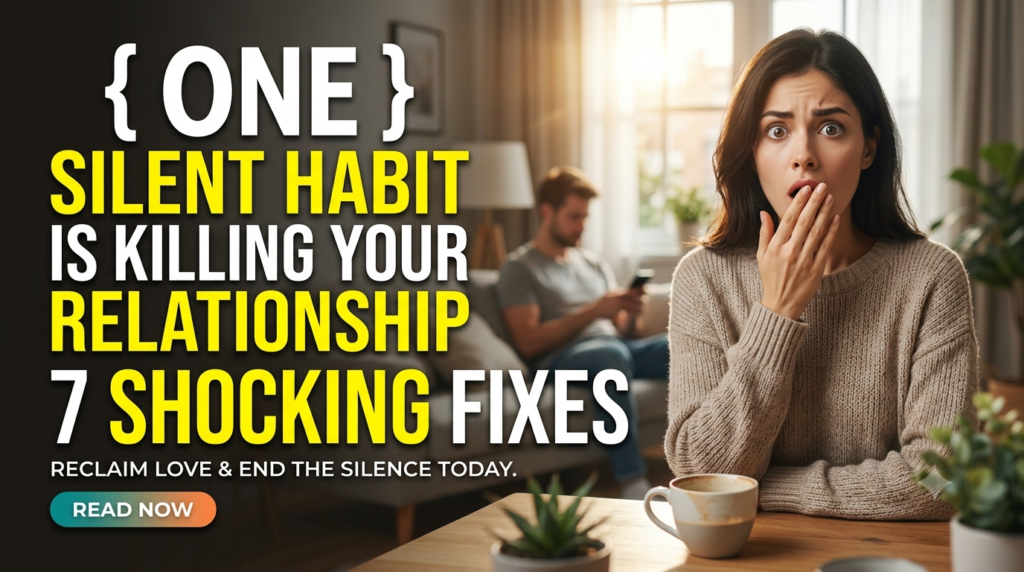
In our modern era, emotional withdrawal has found a perfect accomplice: the smartphone. If you immediately pull out your phone, scroll through social media, or open a mobile game the moment a tense conversation begins, you are using digital noise to facilitate emotional absence. This form of snubbing, or “phubbing,” sends a clear message that your screen is safer and more valuable than your partner’s feelings.
Step-by-Step Workflow to Replace Silence with Connection
Breaking a deeply ingrained habit requires more than just good intentions; it demands an actionable strategy. If you realize that one silent habit is killing your relationship, use this proven step-by-step workflow to safely dismantle your emotional walls and rebuild a bridge of communication.
Step 1: Recognize the Biological Trigger
The moment you feel your jaw tighten, your heart rate increase, or the overwhelming urge to walk away, acknowledge that you are experiencing emotional flooding. Say to yourself: “My nervous system is overwhelmed right now, and I am tempted to shut down.” Awareness is always the first step toward control.
Step 2: Implement a Planned, Productive Break
Instead of just walking away or going completely silent, learn how to take a structured timeout. Research shows that a biological reset takes at least 20 to 30 minutes of psychological distraction. Use a script like this to communicate your need to your partner:
“I want to hear what you’re saying, but I’m feeling too overwhelmed to respond constructively right now. I need to take a 25-minute break to clear my head, but I promise I will come back to this conversation at [State a specific time].”
Step 3: Self-Soothe During the Timeout
Do not use the break to stew over the argument or list all the reasons why your partner is wrong. Instead, engage in activities that lower your heart rate. Deep breathing exercises, taking a short walk outside, or listening to calming music are highly effective methods to bring your nervous system back to a state of safety.
Step 4: Re-engage with Vulnerability
Once the agreed time arrives, you must return to the conversation. Start by expressing your internal experience rather than attacking your partner. Use “I” statements instead of “You” accusations. For example, instead of saying, “You are always nagging me,” try saying, “I felt criticized and cornered, which made me want to shut down.”
Comparing Healthy Communication vs. Emotional Withdrawal
To get a clear overview of where your relationship stands, look at the fundamental differences between healthy processing and destructive withdrawal.
Behavioral Metric
Healthy Processing & Connection
Destructive Emotional Withdrawal
Primary Intent
To understand, repair, and find a resolution.
To protect oneself and avoid immediate discomfort.
Handling Overwhelm
Explicitly requesting a temporary, timed break.
Abruptly shutting down, walking out, or ignoring.
The Partner’s Experience
Feels heard, respected, and reassured of safety.
Feels abandoned, lonely, rejected, and anxious.
Long-term Outcome
Deepened trust, intimacy, and resilience.
Chronic resentment, alienation, and breakup.
Common Mistakes Couples Make When Trying to Heal
When couples realize that one silent habit is killing your relationship, they often swing to the opposite extreme or make critical errors in their recovery journey. Avoid these common pitfalls to keep your healing on track.
Forcing Immediate Resolution: Trying to force a partner who is completely overwhelmed to talk right then and there will backfire. It causes deeper panic and harsher shutdown. Respect the need for a timeout, provided it has an explicit return time.
Using Timeouts as a Weapon: A timeout is designed for self-soothing, not as an extended, multi-day punishment. If your break lasts longer than a couple of hours without communication, it has turned back into the silent treatment.
Ignoring the Root Cause: The silence is merely a symptom. If you fix the silence but never address the underlying issues—such as unmet financial expectations, lack of intimacy, or uneven division of labor—the withdrawal will eventually return.
FAQ Section
1. Is taking a break during an argument considered emotional withdrawal?
No, taking a break is a highly healthy communication strategy, provided it is done correctly. The key difference lies in the communication of intent and timeline. Emotional withdrawal involves shutting down without explanation and leaving your partner hanging. A healthy break involves stating that you are overwhelmed, requesting a specific amount of time to calm down, and promising to return to finish the conversation.
2. Why does my partner get so angry when I just want peace and quiet?
Your partner likely views your desire for “peace and quiet” as an act of rejection and dismissal. When you shut down to avoid a fight, your partner feels completely cut off from you. Their anger is often a desperate, anxious attempt to break through your wall and get a reaction, ensuring that you are still emotionally present in the relationship.
3. Can a relationship survive after years of the silent treatment?
Yes, a relationship can certainly heal, but it requires a mutual commitment to changing your communication habits. Both partners must acknowledge the pain caused by this dynamic. The withdrawing partner needs to practice staying present through discomfort, while the pursuing partner needs to learn to give space without using criticism or aggression.
4. How long does it take to break the habit of emotional withdrawal?
Breaking deep-seated behavioral habits takes time and consistent practice. On average, it can take anywhere from a few weeks to several months to successfully rewire your response to relationship stress. Consistently applying structured timeouts and practicing open communication will gradually make vulnerability feel safer than silence.
5. What should I do if my partner refuses to stop using the silent treatment?
If your partner refuses to acknowledge that one silent habit is killing your relationship and completely rejects any attempt to improve communication, it may be time to seek professional support. A licensed marriage and family therapist can provide a safe, neutral space to uncover the deeper issues causing the shutdown.
Conclusion
The silent walls we build to protect ourselves from conflict invariably end up trapping us inside our own loneliness. If you recognize that one silent habit is killing your relationship, please know that you possess the power to change the trajectory of your love story. Real intimacy does not mean the complete absence of conflict; it means having the courage to face that conflict together, hand in hand, even when your instincts tell you to run away and hide. Start small today. The next time you feel the urge to pull away, take a deep breath, look your partner in the eyes, and speak your truth, even if your voice shakes. Your relationship is worth the discomfort of staying open.
We can provide advice and practical solutions, but the final outcome is in the hands of Allah (SWT). Turn to Him, make sincere du’a, and trust His plan. With Allah’s help, every difficulty has a way forward, and every goal becomes possible. For questions or guidance, contact:



Pingback: Before You Save Another Dollar: 5 Shocking Steps to Build Wealth - Ozama solver
Pingback: The Invisible Distance Between Couples: 10 Proven Ways to Heal - Ozama solver